


Regular price
€35,95 EUR
Sale price
€35,95 EUR
Regular price
We understand the importance of timely delivery. That's why we make it our top priority to ensure that every order is delivered on or before the promised delivery date. We have a dedicated logistics team that works around the clock to process and ship orders as soon as possible. In the unlikely event that an order is delayed, we will work with you to find a solution and make it right. With our on-time delivery guarantee, you can shop with confidence knowing that your package will arrive when you expect it to.


Spend another €150,00 and get free shipping!


You may be unfamiliar with the idea of dog boots, you might be wondering if they are really necessary. Your dog's paw pads are naturally designed to handle walking on rough surfaces and in different environments. But their ability to handle extreme temperatures is still limited.
Let’s be honest: dog boots can look hilarious, especially if your dog isn’t used to them. But comedy aside, dog boots perform a necessary function. Dog boots protect your dog’s sensitive paws from the ice and snow as well as other cold-weather hazards such as road chemicals and salt.
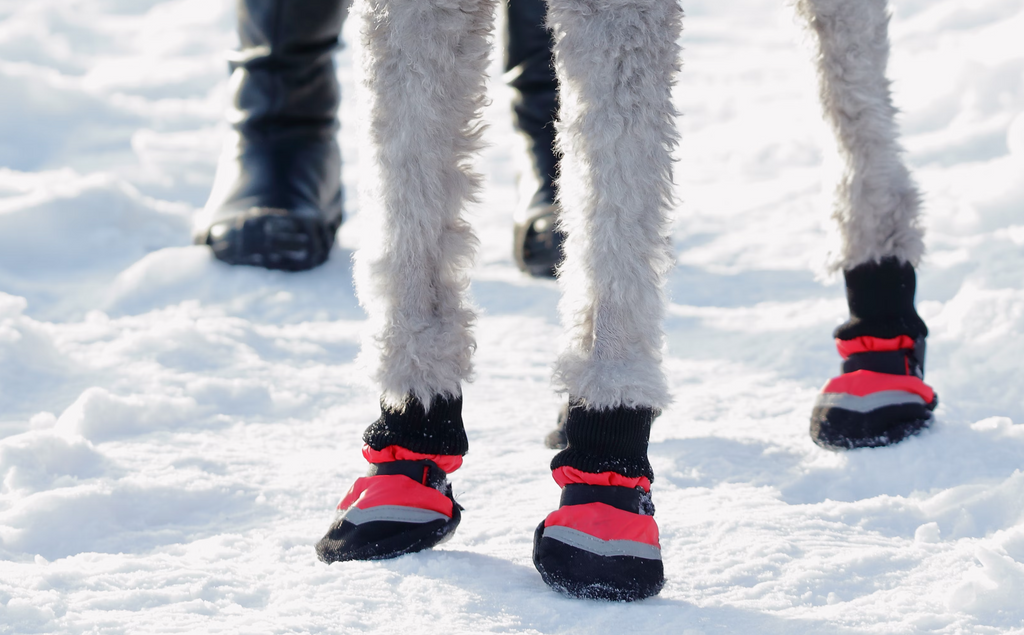
Dog boots, also known as dog booties, are tough, fabric, rubber, or plastic covers for dogs' paw pads used primarily to protect the dog from cold weather, rugged terrain, and injury. They're analogous to cowboy boots and are pretty popular in dog sled racing. There are three main components to dog boots: the sole, the uppers, and the sock liner. The sole is the rubber portion of the boot that goes over the entire ankle. The uppers are the main structure of the boot, and it has a closure on the backside of the boot. Lastly, the sock liner is the portion of the boot that provides padding, insulation, and comfort for the dog.
A popular material used in dog boots is breathable mesh fabric used as the lining. This allows dog boots to be designed for different seasons. While dog boots for snow might be the most common application, all-season dog boots can be helpful for running and hiking with your dog. Other small dog boots include water-wicking features, which allow the dog boot to keep paws dry through the rain or other inclement weather conditions. Some boots also have antimicrobial properties and rubber soles to absorb the impact of gravel and stones kicked up by their paws.
we recommend


